Bringing deliberation to the classroom: Teachers explore ways to help students speak across differences
“Imagine it is the spring of 1787,” said Lori McGarry, facilitation coordinator at the James Madison Center for Civic Engagement at James Madison University, as she turned to the group. “Our republic is unstable, and the liberty we won just four years ago is threatened. What should we do?”
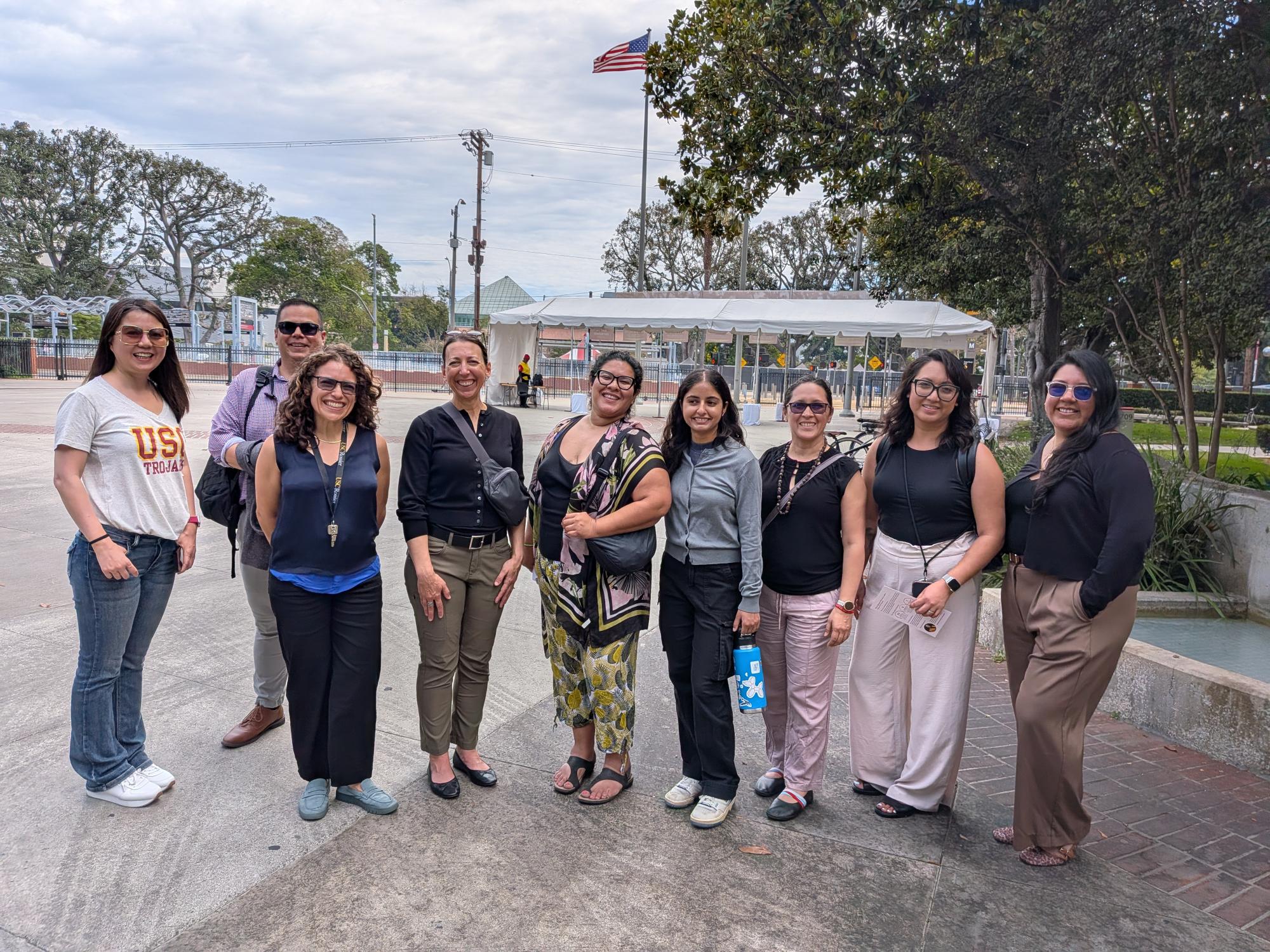
The exercise was part of a series of workshops for teachers to explore resources for bringing deliberation to the classroom and helping students learn to speak across differences, make decisions together, and more toward action planning. Created through a partnership between JMU and National Issues Forums Institute, the program convened summer seminars across the country, beginning with James Madison’s Montpelier in Virginia, the David Mathews Center for Civic Life in Alabama, and University of Southern California’s Rossier School of Education.
Participants ranged from pre-K to post-secondary teachers leading classrooms on a variety of subjects.
“The teacher workshops were an opportunity for teachers interested in this work to come together to engage with others, strengthen their own practice, and think about other ways they can do deliberation with their students and colleagues,” McGarry said.
Robert Medrano, senior program director at Teach Democracy and project specialist at the USC Democracy Project, led the USC workshop, which he said was divided into three parts.
The first introduced teachers to “What’s Next, America?” – a new, nationwide NIFI program designed to help communities come together locally to talk, decide, and act on the issues that matter most to them in celebration of the nation’s 250th anniversary. “What’s Next, America?” asks participants in a community to work through three sets of deliberative discussion questions centering on the overarching questions: where are we now; where do we want to go; and how will we get there. The initiative includes resources tailored to K-12 students.
Medrano said he appreciated the breadth of the initiative and its ability to be tailored to specific communities. He also valued the action planning component, which he said helps students develop a sense of agency.
“It’s a great opportunity for young children through high school to talk about what’s next for their community and imag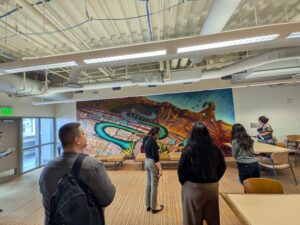 ine what the world could be like,” he said. “And once we’ve talked about these complex issues, what could I, as a student, do about it?”
The second part of the workshop centered around NIFI’s newly updated historic decision guides, which help students deliberate about key decisions at critical points in U.S. history.
“We wanted to introduce them to resources that would situate deliberation within a larger historic context and help students make those connections to the fact that history is a series of choices and they’re a part of that history,” McGarry said.
Next, Medrano shared USC resources around inquiry and helping students consider “informed action projects.” Many of the resources considered the diversity of classrooms, such as strategies tailored to multilingual learners.
“What we brought to the table was building the ecosystem for successful deliberation in K-12, which requires students doing some kind of inquiry, to have that background knowledge before they start talking about complex issues and current events,” he said.
“If we’re able to build these skills with students from a very young age, this could be something that benefits our democracy,” he added.
Samantha Macias, principal and teacher at Glendale Adventist Academy in Glendale, California, said she was excited about the potential impact of these resources on students’ speaking and listening skills, as well as “their feeling like they have a voice.”
She said she plans to use deliberative formats with her mock trial team and when teaching art history, including by presenting different perspectives from art critics for students to deliberate on. As a principal, she said deliberation may also be helpful during staff meetings.
“The quality of the resources are exceptional, and they really care that we really learn the material in that short time and feel confident going forward and putting it out to our students,” Macias said. “I was really excited walking out of that workshop because I felt like I learned something and that I could use something confidently with my kids.”
McGarry said the workshop came out of a need.
“People want to talk across divides, but they don’t necessarily have the opportunities or skills to do that,” she said.
K-12 classrooms are a “prime space to introduce deliberation and these skills,” she added.
As she designs the yearlong program, McGarry is organizing monthly meetings with the cohort of about 60 teachers centering around different focus areas. The September meeting, themed around “meaningful connections,” explored where deliberation can fit into what the educators already teach.
McGarry is also collecting feedback to shape the experiences of future cohorts.
“We’ve been learning from each other,” she said. “There is a lot of opportunity to build on what has already been started and grow this program tremendously.”